The Friday Everything Lands: Why November’s Release Pile-Up Is a Choice, Not a Coincidence
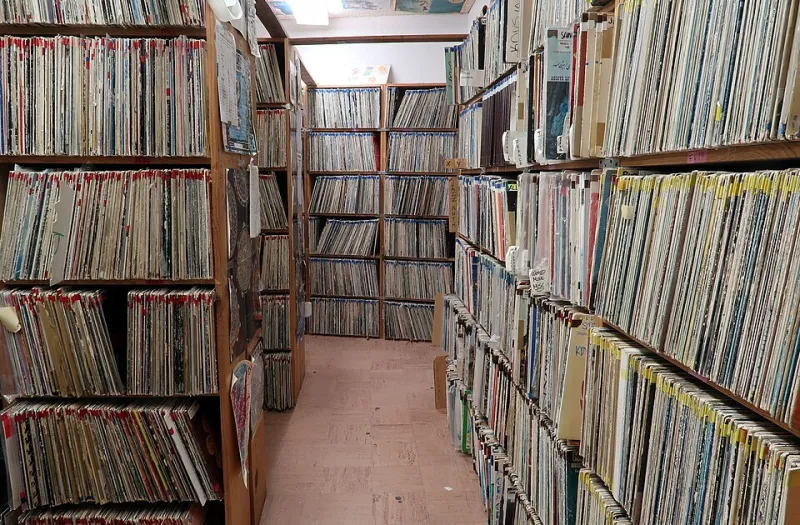
Photo: Melikamp, CC BY-SA 4.0, via Wikimedia Commons
The last Friday that counts
There is a particular kind of silence on the last Friday of November. Not in the shops — they are loud enough — but in the release calendar, where every label, manager and artist seems to have looked at the same date and thought: yes, that is the one. This year that Friday is 27 November 2026, and the schedule is not so much a calendar as a motorway pile-up.
You can see the logic from a distance. End-of-year lists have deadlines. Playlists refresh. Christmas shoppers buy physical records as gifts. The Official Charts build their festive narrative. Everyone wants to be in the conversation when the year is being summed up, and the conversation starts earlier than most people admit. So the last viable Friday becomes a stampede.
But let us be honest about what is happening. This is not a natural phenomenon, like leaves falling or the clocks going back. It is a choice — a collective, risk-averse choice — and it is making the release calendar worse for almost everyone.
Everyone is chasing the same ghost
The industry loves to talk about discovery. In practice, it loves a deadline more. A late-November release gives a record the best shot at year-end coverage, festive retail and the kind of playlist placement that can make a January release feel like old news before it has even had a chance. That is the theory. The reality is that every act is now competing for the same finite attention in the same seven-day window.
A debut album from a Bradford singer-songwriter does not benefit from being released the same day as a legacy act’s greatest-hits package and a major-label pop record with a TV slot. It benefits from being heard. But in a pile-up, the smaller record is not heard. It is buried. It is a footnote in a release round-up, a line in a newsletter, a thing that gets three plays on a playlist before the algorithm moves on.
The majors can survive this. They have the budgets, the press teams and the retail relationships to make noise. The grassroots acts — the ones who actually need the calendar to work for them — are the ones who get flattened.
What the pile-up does to small records
There is a practical cost, too. Vinyl pressing plants are already stretched. Record shops have limited shelf space and limited staff attention. PR teams are juggling more releases than they can properly pitch. Even the most well-meaning broadcaster or journalist has only so many hours in the day. When everything lands at once, the loudest records win. That is not a meritocracy. It is a queue.
And the queue is not neutral. A band with a devoted fanbase and a good live following can still get lost if their release date puts them up against a machine. The end-of-year scramble does not just crowd the calendar. It distorts the value of a release. It tells artists that timing is more important than the songs, and that being in the right week matters more than being ready.
Listeners don’t owe the calendar their attention
Here is the part the industry often forgets: listeners are not a resource to be harvested. They are people with finite time, finite money and a growing sense that they are being shouted at. A pile-up does not create more listening. It creates more skipping. It creates the feeling that music is a wall of content rather than a set of records worth sitting with.
The fans who still buy albums — and there are plenty of them in the UK — are not waiting for a traffic jam. They are waiting for something that feels like it was made with care and released with confidence. A record that arrives in a quiet week can still find its audience. A record that arrives in a crush might never get the chance.
The industry has trained itself to sprint at the same finish line
None of this is new, exactly. The end-of-year crush has been building for years, as streaming data, playlist culture and festive retail have tightened their grip on release strategy. But 2026 feels particularly congested. The calendar is not just busy. It is predictable in its chaos. Everyone knows the last Friday of November is a bottleneck, and everyone still runs towards it.
That is the definition of a collective action problem. No single label wants to blink first. No manager wants to explain to an artist why their record is coming out in February instead of the Christmas window. No publicist wants to be the one who says the obvious thing: your album will be better served by a week when people can actually hear it.
A modest proposal: break the logjam
There is no single fix, but there are obvious ones. Stagger releases across the autumn instead of treating one Friday as the finish line. Give smaller acts a clearer run at attention. Let year-end lists consider records released in December, or at least stop pretending that the final week of November is the only time a record can count. Encourage retailers and broadcasters to plan beyond the pile-up. None of this requires a revolution. It requires a bit of nerve.
The alternative is what we have now: a release calendar that looks like a rush-hour train, with everyone pressed against the glass and no one able to move. The end-of-year scramble might serve the industry’s need for a narrative. It does not serve listeners. And it certainly does not serve the artists who are buried in the pile.