A Fridge, a Towel and a Fair Shake: Reading the UK Tour Rider in 2026
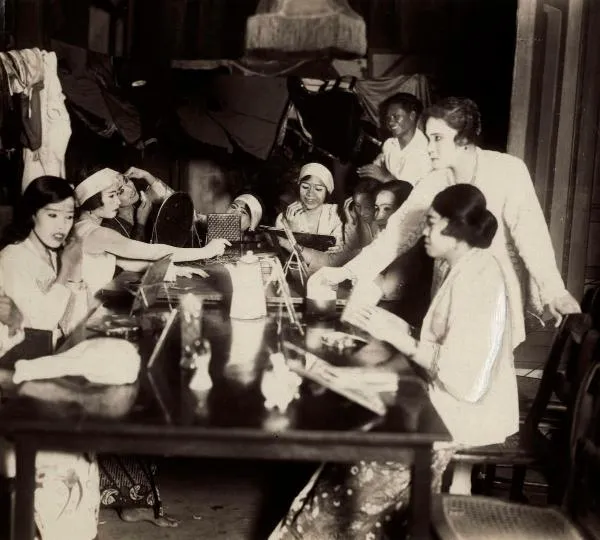
Photo: Unknown authorUnknown author, Public domain, via Wikimedia Commons
There is a moment, roughly ninety minutes before doors, when a tour manager will open a fridge in a room above a pub in Leeds and find nothing but a half-empty bottle of brown sauce and somebody's lunch. This is the point at which the tour rider stops being a document and becomes a small, undignified detective story.
Riders get a bad press. Say the word and people picture champagne, bowls of M&Ms with the brown ones removed, a specific brand of still water that must be served at 11 degrees. And yes, that stuff exists, mostly at a level of the industry where the artist fee has more zeroes than the guest list has cousins. But down where most UK music actually happens — the 150-cap rooms, the arts centres, the converted churches, the social clubs with a stage at one end — the rider is a far quieter thing. It is a list of what a person needs in order to do their job without embarrassing themselves.
Six Beers Is a Benchmark, Not a Demand
Take the classic pub-circuit rider. Two lagers, a bottle of water, a clean towel, somewhere to change, a mirror with a light near it, parking for the van, and a working socket that isn't behind the fruit machine. Read that again and ask yourself which item sounds unreasonable.
None of them do, which is the point. Six beers on a rider is not a request for six beers. It's shorthand for we are going to be here for five hours, we have driven from Sheffield, and we would like to not feel like intruders. It's a benchmark: this is the minimum standard of hosting we're assuming. When a venue meets it without fuss, the night tends to run smoothly. When it doesn't, you can usually trace a bad gig back to a promoter who thought hospitality was a cost to be minimised rather than a system to be operated.
The mirror gets mocked more than anything else, which is unfair. A mirror is not vanity. A mirror is how a performer checks that their shirt isn't inside out, that the eyeliner hasn't migrated, that they look like a human being rather than a bag of nerves with a guitar. It's also, quietly, a test of whether the venue has a dressing room at all. Plenty don't. Plenty have a storeroom with a mop in it and a sign saying STAFF ONLY. The rider asks for a mirror because it's politer than asking do you actually have a backstage area, or are we doing this in the gents?
The Compromise Layer
By the time you get to a mid-level venue — the 400 or 500-cap rooms, the ones with a balcony and a bar that takes card — the rider has usually been through several rounds of negotiation before anyone loads in. What arrives on the day is not the document the artist sent. It's the compromise layer.
This is where the deli platter appears. Fruit and crisps. A tray of sandwiches that someone's cousin made. The rider asked for hot food; the venue's hospitality policy says no hot food. The rider asked for a quiet room; the venue has one office and the promoter is using it to count float. The rider asked for a parking space; the parking space is a loading bay with a forty-minute limit and a traffic warden with excellent instincts.
None of this is usually malice. It's budget. Hospitality comes out of somebody's line, and at this level that line is thin. A promoter working a 400-cap show might have forty or fifty quid set aside for the dressing room, and that forty or fifty quid is competing with the support act's fuel money and the extra hour of crew time the get-out is going to need. So the rider gets edited, quietly, in an email at four in the afternoon, and the artist finds out when they open the fridge.
That's why the rider is such a good read. It's a paper trail of priorities.
Who Actually Reads It
Here's the unglamorous truth: the artist often doesn't. The tour manager does. So does the promoter rep, the venue's ops manager, and — crucially — whoever is doing the run to the supermarket. At a lot of British venues, the rider becomes a Tesco Express shopping list at about 5pm, executed by a runner who has been given thirty pounds and a rough idea of what a vegan is.
Which is why the best riders are written for that person. Clear, short, no ambiguity. "Two bottles of oat milk" beats "dairy alternatives as required". "One quiet room with a door, from 6pm" beats "appropriate artist welfare provision". A good rider is a set of instructions that can survive being forwarded three times and read on a phone in a car park.
The Crew Clause
Look closely at any rider and you can usually tell whether the people writing it have ever loaded a van. The riders that ask for a kettle also ask for water for the crew. The ones that specify coffee usually mention the sound engineer by role. The ones that don't tend to be the ones where someone at 11pm is still asking whether there's anywhere to fill a water bottle.
Crew catering is the quiet scandal of the lower-middle live sector. A touring party of six might get a rider that covers the band and then discover there are four local crew, a venue tech and a merch person who've been in since two o'clock. A rider that says "meals for the touring party" is doing less work than one that says "hot food for eight, including local crew". It's a small wording change with a big effect on how a room feels at the end of the night.
The Rider Is Getting More Human
The genuinely interesting shift in 2026 is what riders are now being used for. Alongside the beer and the towels, more UK artists are listing access requirements, sensory needs, dietary specifics, and a named person to speak to if something goes wrong. Quiet spaces are being requested by artists who aren't unwell, just sensible. Pronoun and name lines have stopped being awkward. Tour managers are writing riders that read less like a hospitality order and more like a piece of HR documentation — which, when you think about it, is exactly what they are. A gig is a workplace for everyone in the building.
That's the bit the diva myth misses. A rider isn't a demand for luxury. It's a request for the conditions under which someone can do their best work in a room they've never been in, in a city they're passing through, with a body clock that's been upside down since Tuesday.
The Receipt
So next time you see a rider leaked and laughed at, read past the beer. Ask what the rest of it is asking for. A clean towel is dignity. A mirror is preparation. Six bottles of water is the recognition that human beings get thirsty. A hot meal for the crew is a statement that the people who build the show are part of the show.
The rider is the least romantic document in British music, and the most honest one. It tells you exactly what a venue thinks an artist is worth, and exactly what an artist thinks they need. In 2026, with costs still climbing and grassroots rooms still fighting for their licences, that's a conversation worth having properly — preferably before someone opens the fridge.