Before the First Chord: The Hidden Venue Invoices Turning Grassroots Gigs Into a Gamble
Photo: Matthew Paul Argall, CC BY 2.0, via Wikimedia Commons
The van is packed. The sat-nav is set. Someone has already claimed the good seat and someone else is holding a service-station pasty like it is a sacred artefact. Then the promoter’s email lands: a PDF with a headline fee, a door split, and a small paragraph headed ‘Additional Venue Charges’. That paragraph is where the night gets interesting.
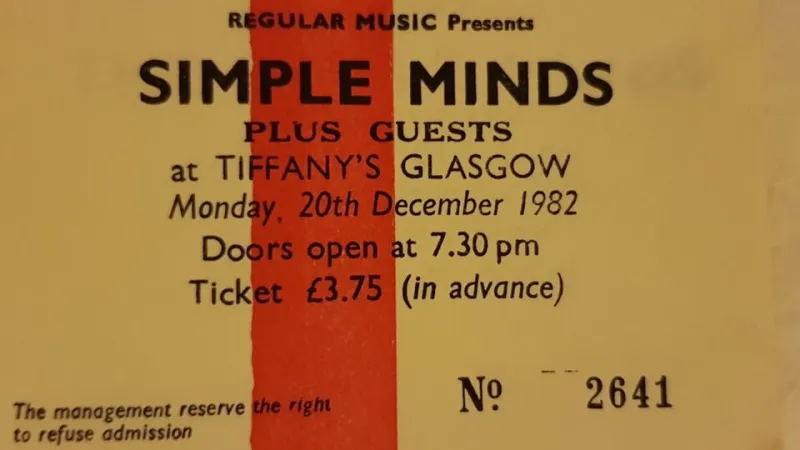
Across the UK in 2026, grassroots gigs are being quietly reshaped by a layer of costs that rarely make the poster. They are not the headline ticket price, and they are not the artist fee. They are the backline hire fee, the soundcheck slot fee, the card-processing surcharge, the charge for using the house drum kit, the charge for loading in before 5pm, the charge for parking the van in the yard. Individually, most look survivable. Stacked together, they can turn a modest payday into a night that costs the band money to play.
The add-ons nobody budgets for
Ask anyone who books small rooms and you will hear a version of the same story. Venues are stretched. Energy bills, insurance, PRS and PPL, staffing, repairs — the list is long and unglamorous. Passing some of that cost to the act is not new. What is new is the granularity. A decade ago, a promoter might have asked for a small contribution towards backline. Now the invoice can include a line for ‘engineering time’ and another for ‘access’. One Yorkshire promoter puts it plainly: ‘It used to be a favour economy. Now it is a fee economy, and everyone is frightened of being the one who absorbs the hit.’
The result is a slow shift in who carries the risk. A band travelling three hours to a 150-cap room may discover that the guarantee is £150, the backline hire is £60, the card fee on merch is 4 per cent, and the load-in window closes at 6pm sharp — after which the charge is £20 per half hour. None of that is necessarily malicious. But none of it is on the flyer either.
Who really absorbs the risk?
For venue owners, the charges are often a survival mechanism. A small room with a house kit and a sound engineer cannot absorb endless free soundchecks. ‘We are not trying to punish anyone,’ says one Bristol venue manager. ‘We are trying to keep the lights on and the engineer paid. If we let every band soundcheck for an hour for free, we cannot open the doors.’ The trouble is that the cost lands most heavily on the acts with the least room to manoeuvre: the new band, the self-released artist, the touring outfit without a label advance.
Promoters are caught in the middle. They want the show to happen, the band to be paid, and the venue to stay open. But when the add-ons are not disclosed upfront, the promoter becomes the person delivering bad news in the car park. Trust erodes. Word gets around. And the rooms that need grassroots acts most — the 100-to-300-capacity spaces that break new artists — start to look like a financial trap rather than a stepping stone.
The small print that bites
Most of the charges are not hidden in the sense of being illegal or secret. They are disclosed, just not prominently. They sit in clause seven of a booking agreement, or in a venue tech spec that nobody reads until the week of the show. A few examples doing the rounds in 2026:
- Backline hire: a fee for using the house amp, drum shells or cymbals, sometimes per item, sometimes per band.
- Soundcheck slots: a paid window for a full line check, with a shorter free window before doors.
- Card surcharges: a percentage added to merchandise sales processed through the venue’s till.
- Load-in access: a charge for using the yard, the lift or the goods entrance outside stated hours.
- Curfew overruns: a per-minute charge for playing past the venue’s licensing limit.
None of these are unreasonable in isolation. The problem is the cumulative effect, and the fact that they are often confirmed after the band has already committed to travel, hotels and days off work.
What bands can do before the van is packed
The practical answer is boring but effective: ask for the full cost sheet before you say yes. Not the fee. The full sheet. Ask what backline is included, what soundcheck time is free, who pays the engineer, how merch card payments are handled, and whether there are any access charges. Get it in writing. If a venue cannot provide it, that is information too.
Build a 10–15 per cent contingency into your tour budget for add-ons, and treat any guarantee as gross until proven net. Ask the promoter to confirm the door split in numbers, not adjectives. And do not be afraid to negotiate: a band that offers to bring its own backline or soundcheck early can sometimes trade flexibility for a lower charge. The rooms that want a relationship will meet you halfway. The ones that will not have told you something useful.
The bigger picture
Grassroots touring in Britain has never been a get-rich-quick scheme. But it has long worked on a fragile social contract: the venue provides the room, the promoter provides the audience, the band provides the night. The add-on economy is testing that contract. In 2026, the question is not whether small venues deserve to cover their costs. They do. The question is whether the bands that keep those rooms alive can afford to be the ones absorbing every hidden line. The answer, increasingly, is no — unless everyone starts reading the small print before the first chord.