The Gig Starts Before You Get There: How Setlist Spoilers Became Part of the Night
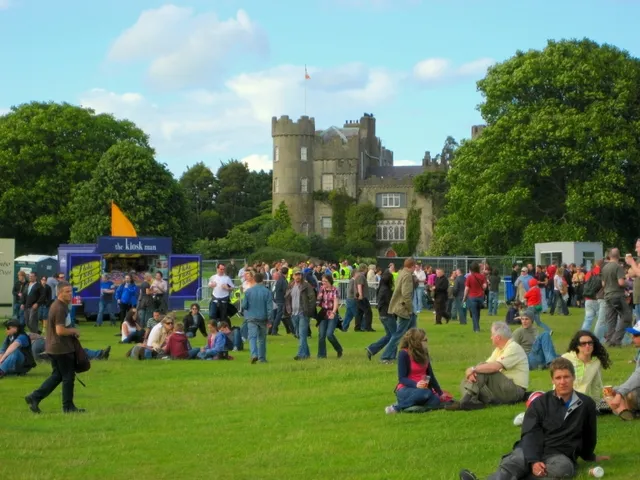
Photo: Ross, CC BY-SA 2.0, via Wikimedia Commons
There is a particular kind of UK gig-goer who arrives early, finds a spot near the bar, opens their phone and types the artist’s name into setlist.fm before the support act has finished. They are not being rude. They are checking the running order. By the time the house lights go down, they know the opener, the mid-set acoustic number, the cover and the song that will get played twice because the crowd will not let it go. Increasingly, so does everyone standing behind them.
Setlist spoilers used to feel like a niche internet habit, the sort of thing you stumbled across by accident and then pretended not to look at. In 2026 they are part of the furniture. A show in Manchester or Glasgow can be documented online within minutes of doors, and a TikTok clip of the encore can travel further than the encore itself. The result is not simply a leak. It is a new layer of the gig night, one that starts long before the first chord and keeps running after the last train.
The setlist as a shared document
What makes the current version different is speed and familiarity. Setlist.fm is no longer a trainspotter’s archive; it is a live document that fans refresh like a football score. Reddit threads and Discord servers do the same job with more jokes and fewer citations. By the time an artist reaches the second night of a UK run, the shape of the show is often public knowledge: the opener, the big singalong, the bit where the band fakes a walk-off, the cover that has been passed around like a secret handshake.
For some fans, that is the point. Knowing what is coming is not a spoiler so much as a programme. It lets you pace yourself, decide when to nip to the bar, work out whether the support act is worth missing and prepare for the one song you actually came for. It also gives the night a shared script. You can see the same look pass across a room when the opening bars land — not surprise, exactly, but recognition. The crowd is in on it.
That has changed the way some artists talk to their audiences. A few now lean into the spoiler economy, posting playful warnings or treating the setlist as a menu rather than a secret. Others go the other way, rotating songs, swapping the encore, throwing in a cover that has not been rehearsed to death. The most interesting response is neither. It is the artist who accepts that the setlist will be online by 8:45pm and decides to make the performance, not the running order, the thing you cannot predict.
The artists’ counter-programming
The UK touring circuit has always rewarded a bit of craft. A club show in Bristol or a theatre date in Leeds is not just a list of songs; it is pacing, lighting, chatter, the bit where the singer gets the room to carry the chorus. When everyone knows the setlist, those details become the surprise. A different intro. A stripped-back version of a hit. A guest who turns up for one night only. The encore may be public knowledge, but the way it feels is not.
Some artists have started to treat the setlist as modular. They keep two or three songs in reserve, change the order depending on the room, or save a cover for the city that has been asking for it. That is not a backlash against spoiler culture so much as a sensible adjustment. If the old surprise was “what will they play?”, the new surprise is “how will they play it?”. For fans, that is arguably a richer deal. You can still get the shock of a lifetime when a deep cut appears, but you are no longer relying on ignorance to enjoy the night.
There is a risk, of course. A setlist that is too predictable can make a tour feel like a product being rolled out city by city. When every show follows the same script, the spoiler does not just tell you what is coming; it tells you that nothing else will. The best UK artists have always understood that a tour is not a single show repeated. It is a conversation with different rooms, different crowds and different train times. Spoiler culture makes that conversation more public, which is not the same as making it less real.
Spoiler etiquette, or the new gig manners
The social side is where it gets messy. There is now a genuine split between fans who want to go in cold and fans who have already read the whole thing. The first group avoids setlist.fm, mutes tour hashtags and politely asks not to be told. The second group treats the setlist as fair game, something to discuss and dissect before the doors even open. Both are reasonable. The friction comes when one group assumes the other is being precious or pretentious.
In practice, the etiquette is simple enough: do not shout the encore at someone who has queued for three hours to be surprised. Do not post a blurry photo of the setlist on the tube home with a caption that gives away the closing song. And do not pretend that spoilers are a moral failing. They are just a different way of being a fan. The UK scene has always had room for the person who knows every B-side and the person who only turns up for the hits. This is the same argument in a new format.
Does knowing ruin it?
The honest answer is that it depends what you want from a gig. If the thrill is purely the unknown, then a spoiler can dull the edge. If the thrill is being in a room when a song you love lands, then knowing it is coming does not necessarily spoil anything. It can even heighten the anticipation. There is a reason people watch the same football match twice, or re-read a favourite book. Knowing what happens is not always the opposite of excitement.
What is changing in 2026 is the assumption that surprise is the default. It is not. A live show is a shared event, and the setlist is now part of the shared text. Artists are learning to write for that, fans are learning to navigate it, and the gig night is becoming something you experience before, during and after. Whether that makes the show better or just different is probably the wrong question. The more useful one is whether the artist gives you a reason to be there in the room. If they do, the spoiler is just another part of the build-up.