The Quiet Room Economy: Who Britain's Listening Bars Are Actually For
There is a version of a Saturday night in Leeds where almost nothing happens. No support act at 7:45. No lighting cue. No bloke three rows ahead filming the chorus for a story he'll delete. You pay fifteen pounds, you take a seat, somebody lowers a needle onto a record, and for the next forty minutes the loudest thing in the room is the room itself.
That's the pitch. And in Manchester, London and increasingly Leeds, people are buying it.
A bar that politely asks you to shut up
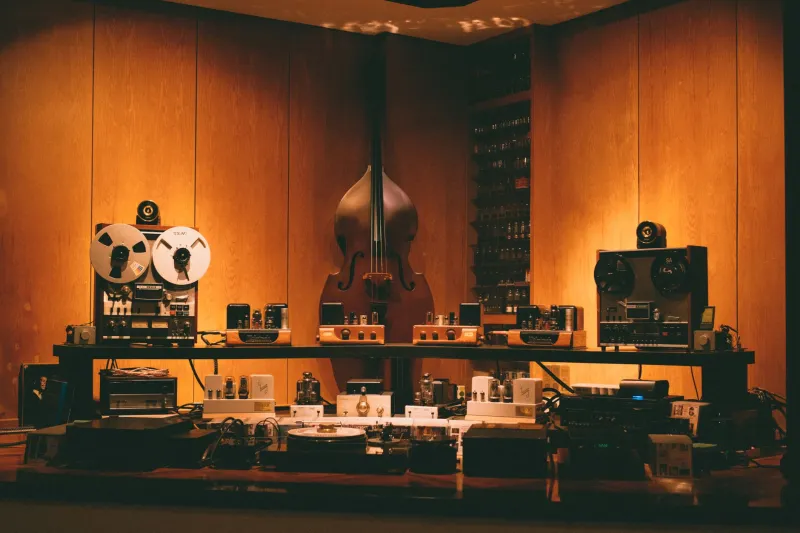
The format is roughly this: a small room, forty seats at most, a sound system worth more than the deposit on a flat, and a ticketed slot built around playing one record front to back. Sometimes it's a selector working through a stack. Sometimes it's a full-album night, the kind of thing that used to happen in a mate's front room after the pub. Table service, low light, and a house rule — spoken, or just heavily implied — that you keep your voice down.
It reads, on paper, like the least commercial idea in British hospitality. You are charging gig money for the one thing a venue normally tries to drown out: silence.
Where the idea drifted in from
None of this is new. Japan's jazz kissaten have been doing careful listening in small rooms since the 1950s, and anyone who has spent an afternoon in one knows the atmosphere is closer to a library with a drinks licence than to a club. Britain's turning point was Spiritland in King's Cross around 2016 — a café-bar built around a serious system rather than a stage. It proved the concept could work here without feeling like a theme bar.
Then came the pandemic, which taught a lot of people to sit still and listen properly again, followed by the cost-of-living squeeze, which made a night out feel like a decision rather than a default. Somewhere in that gap, the listening bar stopped being a curiosity and became a category.
The sums are tighter than the aesthetic suggests
Here's the part the Instagram posts never show. Thirty-six seats at fifteen quid is £540 a sitting. Run two sittings and you're at just over a grand, before you've sold a single negroni. Subtract two staff, rent on a small unit in a city centre, PRS and PPL, and the depreciation on a turntable that costs more than a second-hand hatchback, and you are not looking at a gold rush. You are looking at a room that has to be full, every night, to break even.
Set that against a grassroots gig. Five-piece band, sound engineer, promoter's cut, collection society fees, and a fifteen-pound ticket that is, in most small venues, already loss-making before the van's diesel is counted. Which is why some promoters have started eyeing the listening bar model with genuine interest. No backline. No riders. No support slot running late. Just a room, a record, and a door split that actually adds up.
Who's actually in the seat
The audience skews older than a typical gig crowd, and that's not an accident. Couples in their thirties and forties. People who stopped going to shows because the crowd got too tall, too loud or too phone-lit. A noticeable sober-curious contingent who want a night out that doesn't require a hangover. Freelancers treating a Tuesday slot like a cinema trip.
And that's the honest case for the format. There genuinely are people who want to hear a record properly, in a room, with other people, without having to shout about it. That's not a con. That's an underserved audience, and someone has finally noticed.
The community claim is where I get twitchy. Some rooms earn it — resident nights, a shelf picked by regulars, a selector who actually explains why this pressing and not that one. Others are just a mailing list and a WhatsApp group doing the emotional labour of a scene that hasn't quite formed yet. You can feel the difference in about ten minutes.
The uncomfortable bit
Silence, sold by the hour, is a luxury product whether it means to be or not. If you live above a neighbour with a subwoofer and a suspended floor, fifteen pounds for two hours of hush sounds like therapy. If fifteen pounds is your food budget for the week, it's a very nicely lit café with a strict door policy.
There is also a curation problem nobody wants to say out loud. Some of these rooms are genuinely educational — a selector with a point of view, an obscure soul 45, a record you'd never have found on your own. Others are a bloke playing Rumours for the fourth time this month, which is a lovely album and also, at this point, the listening-bar equivalent of a pub covers band.
What would make it more than a trend
Three things, and none of them require a bigger amplifier.
Cheaper off-peak slots. A midweek afternoon sitting at six or seven quid would open the door to students, shift workers and anyone who can't justify a fifteen-pound ticket on a Saturday. Early-evening all-ages sessions, before the bar finds its late-night voice. And honest pricing notes on the door — tell people what the ticket is actually paying for, because a crowd that understands the economics is a crowd that comes back.
Beyond that: residents with real taste, and visible links to local record shops rather than a Discogs order and a mood board. The venues doing this well are already doing it. The ones coasting on exposed brick and a valve amp will thin out inside two years, the same way every other hospitality trend thins out.
So is it an alternative to the gig? Not really. It's a different night out with a different job. But it's a room where a record gets treated like it matters, and in a country where the small venue is fighting for its life, that's worth fifteen quid at least once.