Lights Up at Ten-Fifteen: The Quiet Curfew Creep Coming for Britain's Gigs
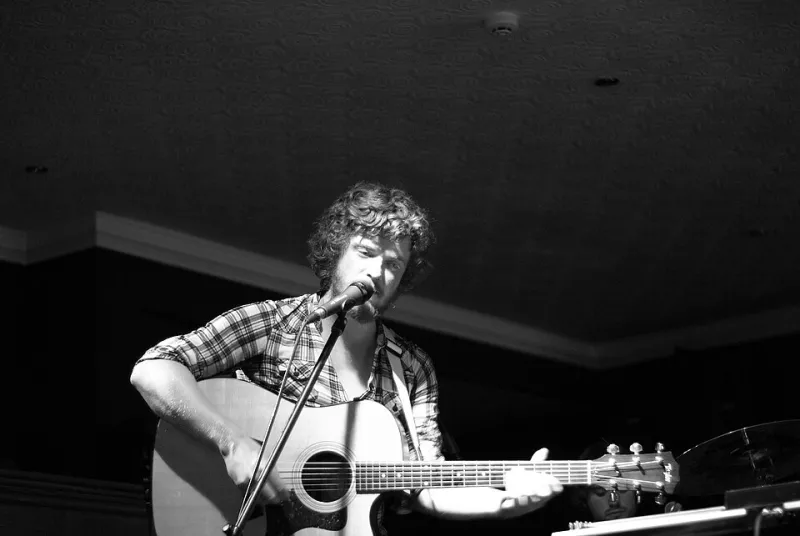
Photo: Yaffa Phillips, CC BY-SA 2.0, via Wikimedia Commons
It’s 10:12pm in a 400-capacity room in Leeds. The band are halfway through what everyone in the building knows is the last song. The crowd are still shouting for more. The venue manager is doing that polite mime from the side of the stage — tapping a wrist that doesn’t have a watch on it. Not because the night has run out of energy, but because the licence says 10:15, the last train is at 10:52, and the door staff are booked until 10:30.
This is curfew creep, and in 2026 it is one of the most consequential things happening to UK gigs. It doesn’t announce itself with a policy paper. It arrives as a slightly earlier door time, a shortened encore, a support act asked to trim ten minutes, a headline set that finishes while the audience are still warm. The 10:15 curfew isn’t a national rule. It’s a hundred local decisions that add up to a different kind of night out.
The Last Train Is Only Half the Story
It’s tempting to blame the trains and leave it there. Britain’s late-night transport is patchy at best, and anyone who has stood on a cold platform in Manchester, Glasgow or Bristol at 11:20pm knows the feeling of a night being cut short by a timetable. But transport is only one pressure in a stack of them.
A premises licence sets the legal cut-off. Noise abatement notices can tighten it further. Councils, environmental health teams and local residents all have a say in how late a room can reasonably make a sound. Add in door staff ratios, bar staff wages, security costs, insurance and the late-night levy that applies in some areas, and the curfew becomes a financial decision dressed up as a licensing one. Stay open an extra hour and the venue doesn’t just pay for the lights and the sound engineer — it pays for the whole apparatus of a late night, often for a bar take that doesn’t cover the difference.
So the hard stop moves earlier. Not everywhere, and not always dramatically. But often enough that the late set — the one that used to start at 10:30 and finish when the room was sweaty and half-broken — is becoming a rarity on the grassroots circuit.
A Setlist Written Around the Clock
Artists are adapting, because they have to. The 90-minute headline set is being redrawn as a 70-minute one with a single-song encore, or no encore at all. Bands are moving the slow number earlier, because a slow number at 10:05 is a mood killer when the lights are about to come up. Some are building “curfew versions” of their sets — tighter, punchier, with the big finish pushed forward so it doesn’t get swallowed by the walk-out music.
That changes the craft more than people realise. A setlist is a piece of writing. It has pacing, tension, release. When the ending is fixed by a clock rather than a room, the closing song has to do more work. It has to be a summary, a peak and a goodbye all at once. Some artists are writing shorter records partly because the live show no longer has room to stretch a groove into a ten-minute outro. The curfew doesn’t just end the night. It edits the material.
The Cost of an Extra Hour
Here’s the crucial bit: the curfew is rarely about anyone being spoilsport. Venue managers are not turning the lights on because they hate fun. They are turning them on because the numbers after 11pm are brutal. Staff want to get home. Security ratios have to be met. Cleaning crews are booked. The building has neighbours, and the neighbours have councils, and the council has a file.
Promoters will tell you the same thing in different words: the margin on a late night is thin, and the risk is high. One noise complaint can trigger a review. One overrun can cost a venue its licence. In a climate where grassroots rooms are already operating on goodwill and borrowed time, the hard stop is a form of self-preservation. It’s not that nobody wants a late night. It’s that fewer people can afford to underwrite one.
Who Gets to Stay Late?
There’s an equity problem in all this. If you live in a city centre with a Night Tube, a 10:15 curfew is annoying. If you live two trains and a bus away, it’s the difference between seeing the headline set and catching the support act. Early curfews hit hardest on fans who travel furthest, and on younger audiences who don’t have a car or a taxi budget. The night out shrinks for the people who need it most.
It also changes the character of the grassroots circuit. The late set is where a band can become a legend in a room of 150 people. It’s where the encore feels like a shared secret rather than a scheduled obligation. When every night ends at the same time, the randomness goes out of it. The gig becomes a slot in a timetable rather than an event with its own weather.
The New Night Out
None of this is a call to arms against venue managers or councils. The curfew is a symptom, not a villain. If we want late nights, we need transport that runs, licensing that works for music as well as residents, and venues that can afford to stay open without gambling the following week’s rent. Until then, the lights will keep coming up early.
What we can do is be honest about what’s being lost. The 10:15 curfew doesn’t just cut a set short. It cuts the night’s memory short. And for a scene that runs on the stories people tell the next day, that’s a cost that doesn’t show up on any licence application.