The Voice Note Release: Why UK Fans Are Hearing Songs Before They’re Finished
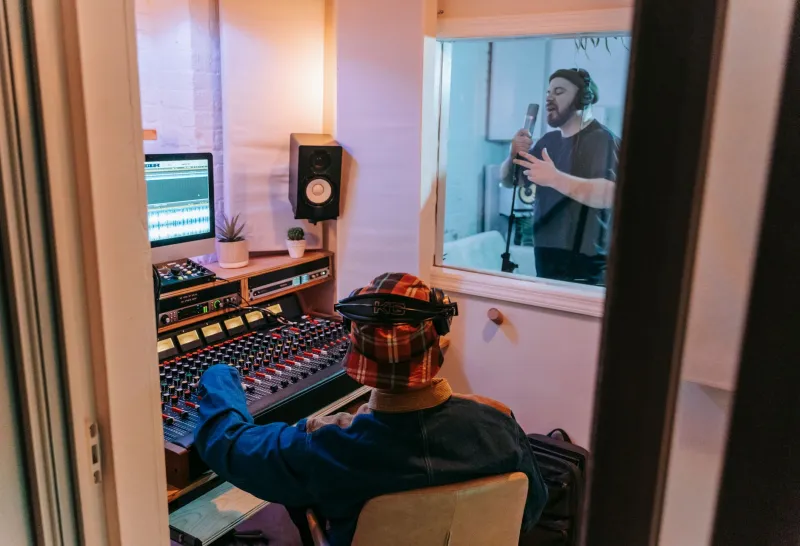
Somewhere in a UK group chat, a song is being born in public. It’s not a single, not a pre-save link, not a polished rollout with a press shot and a radio edit. It’s a 47-second voice note: a guitar part, a half-mumbled chorus, a bit of traffic in the background and a message that says “is this anything?” A few hundred people hear it before the artist has decided whether it’s even a song yet.
That used to be the stuff of private notebooks and late-night anxiety. In 2026, it’s becoming part of the release cycle. UK artists are sending unfinished tracks to fans through WhatsApp groups, Discord servers, Telegram channels, Close Friends stories, Patreon posts, Substack newsletters and deliberately scruffy private links. Sometimes it’s a demo. Sometimes it’s a voice note. Sometimes it’s a bedroom recording so rough that the fan has to meet the song halfway.
From the bedroom to the group chat
The appeal is obvious from the artist’s side. A finished record is expensive and slow. A demo is fast and cheap. But this isn’t just about money or deadlines. It’s about proximity. The group chat demo gives fans a seat in the room while the thing is still soft. They hear the wrong chord that becomes the right one. They hear the lyric that gets changed after someone replies “keep the second verse”. They hear the song before the press release has told them what to think about it.
For listeners, that intimacy is potent. A finished album arrives with a story already attached: the influences, the recording studio, the narrative arc. A voice note arrives with nothing but a voice. It feels less like being marketed to and more like being let in. In a UK music scene where so much has been flattened into the same clean rollout, that scruffiness stands out. It says: this is a person, not a campaign.
Rough is the point
There’s a long tradition of demos, bootlegs and bedroom tapes in British music. What’s different now is the speed and the intimacy of the channel. A fan doesn’t have to wait for a cassette to circulate or a blog to leak a track. They can get the song in the same app they use to arrange a night out. The distance between artist and audience has collapsed to the size of a notification.
That collapse can be beautiful. It can also be messy. When an artist shares a rough version, they are inviting opinions on something that isn’t finished. Some fans will treat that as a collaboration. Others will treat it as a preview and ask when the “real” version is coming. The artist has to hold both responses without letting either one dictate the work. That’s a skill, and not everyone has it.
The intimacy is the product
There’s a commercial story here too, though it’s rarely as cynical as it sounds. The group chat demo is part of a wider shift away from release day as a single, monolithic event. Artists are building smaller moments around a record: the first voice note, the private link, the early mix, the lyric reveal, the fan-only Q&A, the final master. Each moment gives the audience something to do. Each one also gives the artist a reason to show up in the feed without shouting “buy my album” into the void.
That is especially useful in the UK, where touring costs are high, venue capacities are limited and the streaming economy rewards consistency more than it rewards the grand gesture. A fan who has heard the demo is more likely to pre-order the vinyl, turn up at the 200-cap room in Bristol and tell a friend. They’re not just buying a record. They’re buying into a process they’ve already touched.
The risk of letting people in early
The risk is real. Fans can be generous, but they can also be brutal. A rough demo invites rough commentary. Some artists will find that liberating; others will find it draining. There’s a difference between a community that says “this is going somewhere” and a comment section that says “this is rubbish, mate”. The line between feedback and entitlement can get very thin very fast.
There’s also the quality-control question. Not every half-formed idea deserves an audience. An artist who shares everything can dilute the thing that made them interesting in the first place. Mystery has value. So does editing. The best versions of this trend tend to be curated: a voice note here, a private link there, a clear sense that the fan is being let into a room rather than handed the keys to the whole house.
Quality control vs community
That tension is the heart of it. The old model said: make the record, polish it, then present it. The new model says: let people watch you make it, then present it anyway. Neither is automatically better. A finished record still has power. A great mix still matters. A well-sequenced album still does something a folder of demos cannot. But the finished record no longer has a monopoly on release day. It’s one moment in a longer conversation.
For UK artists, that conversation can be a lifeline. It can build a fanbase before the first tour is booked. It can make a small label feel like a community. It can turn a bedroom project into something shared. But it only works if the artist stays in charge of the boundaries. The group chat should be a room, not a boardroom.
Release day is no longer a single day
In 2026, release day is more like a season. The voice note is the first frost. The private link is the thaw. The single is the loud bit. The album is the thing you hold. Fans are learning to live with the mess in between, and artists are learning to let them. That’s not a collapse in standards. It’s a change in contract.
The artists who get it right will be the ones who know what to share, when to share it and when to close the door and finish the song. The ones who get it wrong will mistake access for intimacy and noise for community. But the impulse itself is sound. People want to feel close to the music they love. In 2026, that closeness often arrives as a voice note, sent before the song is done.