Who’s Holding the Fader? Britain’s Grassroots Sound Engineer Gap

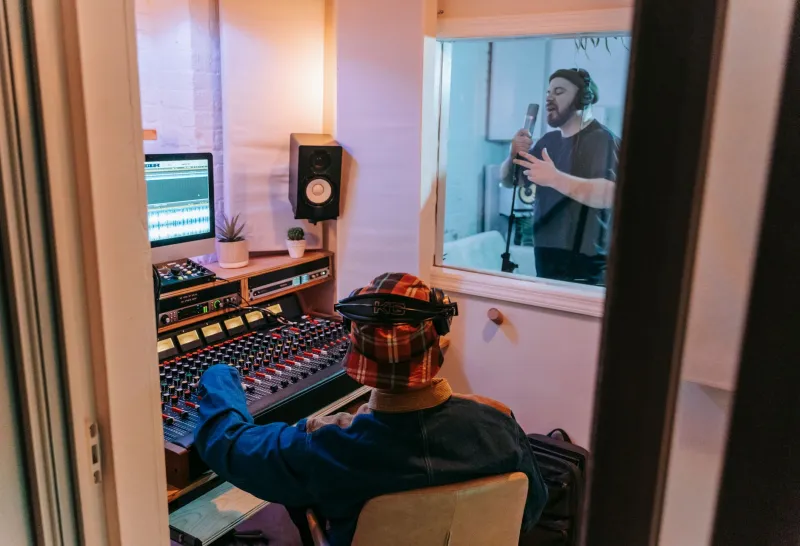
You can tell within thirty seconds whether a small venue has a sound engineer who knows the room. The vocals sit. The kick doesn’t swallow the bass. The feedback is caught before it turns into a tear-up. And when it’s right, nobody notices. That’s the point.
When it’s wrong, everyone notices. The band blames the promoter, the promoter blames the desk, the audience drifts to the bar or the door. A night that should have been a triumph becomes a story about “the sound being crap”. For grassroots venues — the 100-to-300-cap rooms where most UK bands learn their trade — that story is getting harder to avoid. The people who run the desk are in short supply.
The invisible vacancy
Walk into a small venue on a Friday and you’ll see the signs. A promoter with a laptop balanced on a flight case, trying to remember where the aux cable went. A guitarist turning their own amp up because there’s no one at front of house. A soundcheck that starts late because the person behind the desk is also doing doors, or merch, or both.
This isn’t a sudden collapse. It’s a slow thinning of the bench. Venues that once had two or three regular engineers now have one. Some have none, relying on a rotating cast of friends, touring engineers picking up a night off, or the promoter’s mate who “knows a bit about PA”. The result is a scene that runs on goodwill and last-minute favours — until it doesn’t.
Why the desk keeps emptying
The causes are tangled, but pay sits near the root. A small venue might offer £60 to £100 for a night that includes load-in, soundcheck, two or three bands, and a load-out that finishes after midnight. Travel isn’t always covered. Parking isn’t always covered. There’s no sick pay, no holiday pay, no pension. Compare that to corporate AV work, wedding gigs or installing systems in bars, and the maths becomes brutal. Why spend a Saturday in a dark room with a broken monitor wedge when you could earn double elsewhere and be home by eleven?
Then there’s the burnout. Small-venue engineers are often a one-person department. They mix front of house, handle monitors from the same desk, deal with the band’s “can you make my vocal sound like [insert hero]”, troubleshoot a dying DI box, and field the promoter’s questions about why the headline act is running late. They do it with no break, no assistant, and the knowledge that if something fails, they’ll be the one blamed. The romantic idea of the gig is a night out. The reality is a shift.
The training gap nobody filled
Colleges and universities turn out plenty of studio engineers. Live sound is different. It’s reactive, physical, and room-dependent. You can’t learn how to handle a feedback squeal at 110 dB from a textbook. You learn by shadowing someone who’s done it, then doing it with someone nearby to catch you. That shadowing used to happen informally. A veteran took on a teenager who hung around the venue, showed them the desk, let them patch a few things, and eventually handed them a support slot.
That pipeline has narrowed. Post-pandemic churn took out a layer of older engineers who decided the late nights and flat fees weren’t worth it. Younger people coming into the industry often look at the economics and choose studio work, touring, or something outside music entirely. Venues, squeezed by rising costs, rarely budget for an assistant. And formal training programmes tend to focus on the bigger rooms, the festivals, the academies — not the 150-cap club with a quirky desk and a house kit that’s held together with gaffer tape.
What it costs the scene
A shortage of engineers isn’t just an inconvenience. It changes what bands can do. Support acts get shorter soundchecks, or none. Bands with complex setups — backing tracks, extra synths, multiple vocal mics — get politely told to simplify. Promoters start booking the same two reliable engineers across every show, which means those two people are exhausted and everyone else never gets a look-in. When illness or a family emergency hits, the night is cancelled or the sound is a gamble.
And the audience feels it. A muddy mix doesn’t just ruin a gig; it tells people that the room doesn’t care. For venues trying to build loyalty in a crowded market, that’s a slow leak.
The people trying to fix it
There are schemes. Venue-led shadowing programmes, where an experienced engineer mentors a newcomer across a handful of shows. Promoter-funded assistant slots, where the headline act’s fee includes a few quid to pay someone to learn. City music boards and grassroots networks have run training days on everything from gain structure to dealing with a vocalist who won’t stop cupping the mic. None of it is national, none of it is fully funded, and all of it relies on people who are already tired.
The scene veterans doing the work deserve a mention. The engineers who’ve been mixing in the same room for twenty years and still take the time to show a young promoter how to coil a cable properly. The ones who answer a panicked text at 5pm on a Saturday. The ones who quietly waive their fee when the night undersells. They’re holding the bench together with their own goodwill, but goodwill isn’t a workforce plan.
What would actually help
Proper pay is the starting point. Not glamorous, not complicated — just a fee that reflects the hours and the skill. Promoters can build an assistant into the budget from the start, even if it’s only for load-in and the first band. Venues can share engineers across a small network, so one person isn’t carrying every night. Training needs to be local, cheap and practical, with shadowing built in rather than bolted on. And bands can help by asking a simple question when they’re booked: who’s on the desk? If the answer is “we’ll find someone”, that’s a warning sign worth talking about.
The desk is not a plug-and-play station. The person behind it is the reason a small gig can sound like a big one. Britain’s grassroots venues are full of brilliant, stubborn people keeping the lights on. They need someone holding the fader too.