Your Call at the Door: The Awkward Economics of Pay-What-You-Can Gigs
Photo: Jaggery , CC BY-SA 2.0, via Wikimedia Commons
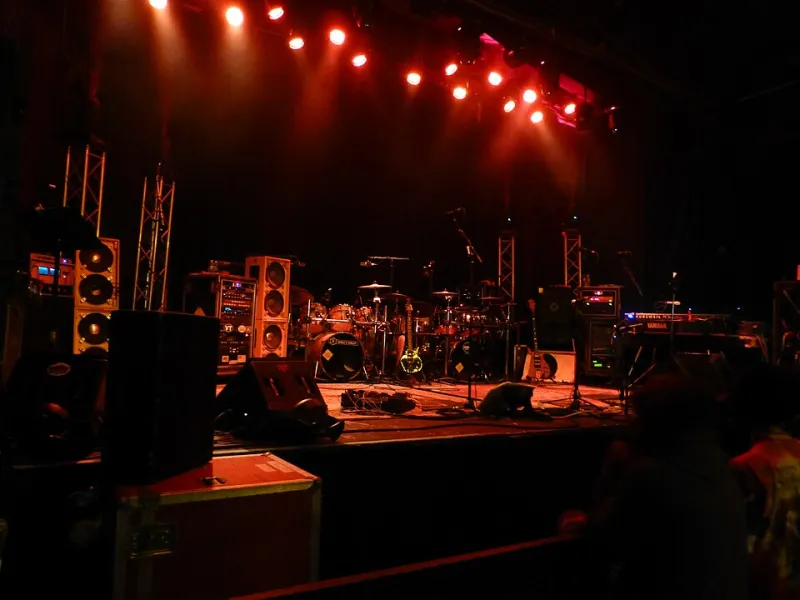
On a wet Tuesday in Leeds, the door of a 90-cap back room is doing something unusual: it is asking a question. There is a cash tin, a QR code taped to a music stand, and a hand-written sign that says suggested £8, no one turned away. By 8.40pm, one punter has put in £15, another has paid £3, two students have walked in for nothing, and the promoter is trying not to stare at the tin like it owes her money.
'It's not a discount,' says Mara Ellison, who runs the night. 'It's a question. But you can feel the room deciding how to answer it.'
Pay-what-you-can entry is not new. What is new is how normal it has become in the smaller corners of the UK live scene — pub back rooms, arts centres, church halls, converted warehouses with a card reader and a dream. In 2026, more promoters are using sliding-scale door prices, suggested donations or a straight honesty box. The appeal is obvious: lower the barrier, fill the room, trust the crowd. The problem is equally obvious once you look at the spreadsheet.
The box is not the business model
A pay-what-you-can door is not free money. It is a pricing conversation moved from the poster to the threshold, and the fixed costs do not care how the conversation goes. A 110-cap room with a £250 artist fee, £150 for a sound engineer, £180 venue hire, £40 PRS, £30 on posters and £60 on card fees needs roughly £710 before anyone gets paid properly. At a fixed £8, you need about 89 people through the door. At an average of £6.20, you need 115. At an average of £4.50 — a very normal Tuesday — you need 158 people in a room that holds 110.
That is the awkward arithmetic. The model works best when the room is small, the costs are low, and the audience already knows the promoter's name. It works least well when the night is trying to pay a touring band a guarantee, cover a city-centre hire fee and hope that strangers feel generous after two pints.
Ellison tried a £0 minimum for three months. 'We had brilliant nights and terrible nights,' she says. 'The brilliant ones were full of people who knew what the room costs. The terrible ones were full of people who thought the door was optional because the sign said so. We now say suggested £8, and we put the break-even number on the wall. It changed the tone. People still pay what they can, but they know what they are paying into.'
The Saturday and Tuesday problem
Here is where the idealism gets a bruise. The same room asks for a tenner on Saturday and a fiver on Tuesday. Sometimes that is because the Saturday bill costs more. Sometimes it is because the promoter is nervous about a quiet midweek and wants to tempt people out. Either way, the audience notices.
'You train people,' says Tomas Reed, a Bradford-based songwriter who has played both kinds of nights. 'If Tuesday is always cheap, Tuesday becomes the night people wait for. Then you wonder why Saturday feels expensive. It's not that anyone is being tight. It's that you've taught them the price is flexible when it suits you.'
There is no clean answer. Tiered entry — £5, £10, £15, with £15 described as paying it forward — can work because it makes the choice explicit. A flat honesty box with no guidance can feel like a guilt trap. A minimum price is clearer but less romantic. The key, several promoters say, is consistency of message rather than consistency of amount: tell people what the night costs, tell them what the money does, and do not pretend the box is a magic trick.
What the artist actually sees
For artists, pay-what-you-can is less about the door and more about the room. Reed reckons his average door money fell by about £1.40 per head at a recent run of sliding-scale shows. But mailing-list sign-ups doubled, and three bookers in the crowd asked him to play again. 'I'd rather have 40 people who'll come back than 60 who paid £7 and forgot me by the bus stop,' he says. 'But I'm not going to pretend that pays the petrol. It's a long game, and not everyone can afford to play it.'
That is the honest split. For a local act with a day job and a loyal following, a pay-what-you-can night can be a community builder. For a touring act with a guarantee, a split after costs and a van to fuel, an uncertain door is a risk too far. The model is not a universal fix. It is a tool for a particular kind of room at a particular stage of its life.
Where the box earns its keep
The nights that seem to make it work share a few things: low overheads, a known host, a crowd that has been told the truth about costs, and a way to pay that does not make anyone feel watched. A QR code helps. A cash tin helps. A sign that says 'tonight costs £620 to put on; the average ticket needs to be £6.50' helps more than a lecture.
Where it struggles is where the room is anonymous, the costs are high and the audience has no reason to care whether the night survives. A pay-what-you-can door in a 400-cap city venue on a Saturday is not the same proposition as a 70-cap pub back room with a regular crowd and a promoter who knows your name. One is a community asking for support. The other can quietly become a discount scheme with better branding.
The price is not the only thing being decided
What pay-what-you-can really exposes is who the night is for. If the only way it works is by hoping strangers overpay, it is not a model; it is a whip-round. If it works because regulars understand the costs and choose to cover them, it is something more interesting: a door policy that builds loyalty instead of just counting heads.
The box can be honest. It can also be a way of avoiding a difficult conversation about money. The difference is whether the room is told the truth — not just asked to guess.